

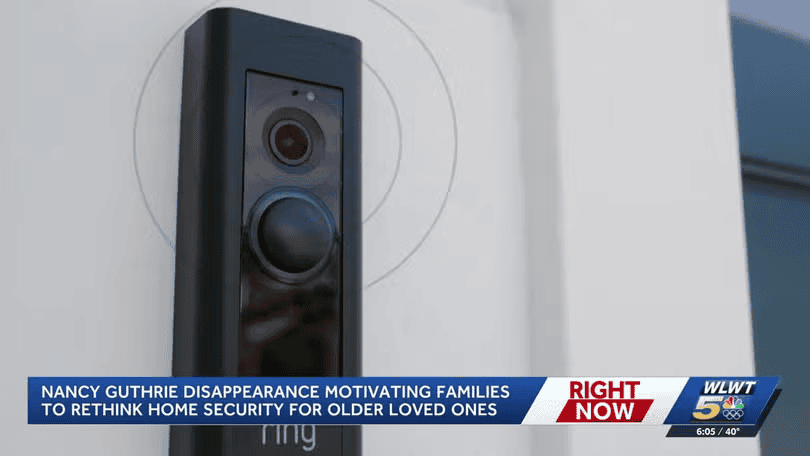
Summary TL;DR
- More than 78% of American homeowners now own a home security camera. Most assume the camera is protecting them. For many, it’s not.
- Three common vulnerabilities affect the most popular camera brands: no active subscription (meaning no cloud storage and limited alerts), WiFi-dependent connections (which are easy to disrupt), and physically removable hardware (which a determined intruder removes in seconds).
- Self-monitoring sounds responsible until you consider what happens at 2am on a Tuesday when your phone is on silent and charging in the other room.
- Cellular-based security systems that communicate over mobile networks, operate without WiFi, and send instant alerts without requiring a paid subscription for basic functionality close the gaps that camera-only setups leave wide open.
Picture This
You go to bed. The front door is locked and the ring doorbell is mounted by the door.
The Nest camera in the hallway has a green light on and everything looks secure.
Great.
However, at 2am someone walks up to your front door and pull the doorbell camera off the mount.
It takes about four seconds, and they set it face-down on the porch.
Your phone buzzes once for a motion alert, but you’re still sound asleep.
The phone is on silent and by the time you check it over coffee the next morning, seven hours have passed.
And most people don’t realize that if you didn’t have an active paid subscription on that camera, there’s no recording.
No clip or cloud backup.
The motion alert told you something happened, but there is zero footage to show what.
This scenario plays out more often than you’d expect.
For example, on February 1, 2026, 84-year-old Nancy Guthrie was abducted from her home in the Catalina Foothills neighborhood outside Tucson, Arizona.
Investigators believe she was taken in the early morning hours while she slept. Her home had a Google Nest doorbell camera installed but it did not have an active subscription.
According to Pima County Sheriff Chris Nanos, the camera disconnected at 1:47am. At 2:12 am, the camera software detected a person, but no video was stored.
“They had no subscription and therefore it would rewrite itself,” the sheriff stated publicly.
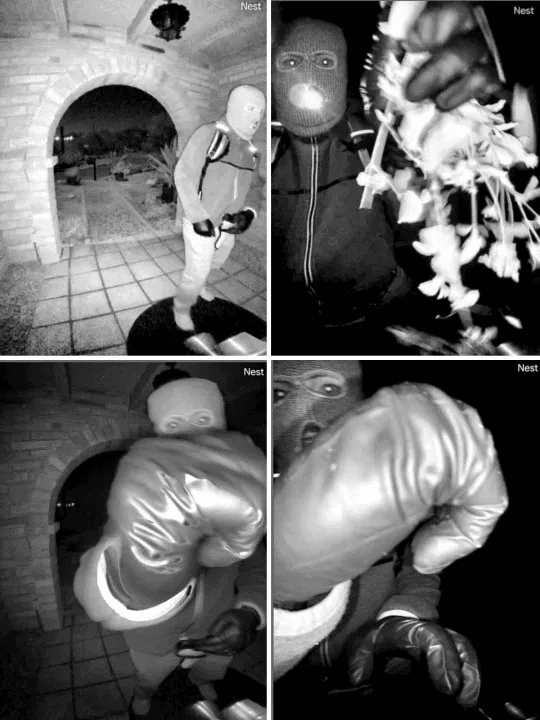
The suspect, captured only in brief, low-resolution images released later by the FBI, had tampered with the camera and placed branches in front of the lens.
Nancy Guthrie’s family did not discover she was missing until nearly 10 hours later, just before noon, when she failed to appear for a scheduled church livestream.
As of this writing, the case remains unsolved. The FBI has offered a reward exceeding $200,000 for information, and the Guthrie family has offered an additional $1 million.
The camera was there but it recorded almost nothing. And the delay between abduction and awareness was measured in hours, not seconds.
How Many American Homes Have Cameras That Aren’t Protecting Them?
A lot more than you’d think.
According to a 2025 survey from American Home Shield, 78% of homeowners now own some form of home security camera.
A separate SafeHome.org report found that approximately 94 million U.S. households have at least one security device installed.
Those are big numbers and they suggest a well-protected country.
- But the numbers don’t tell you how many of those cameras are active.
- How many have paid subscriptions.
- How many are connected to WiFi that goes down during storms.
- How many are screwed into a wall mount that a teenager with a flathead screwdriver could remove.
Most home security cameras from Ring, Nest, and Arlo provide only limited functionality without a paid subscription.
In most cases, that means you get live viewing and basic motion alerts. You do not get cloud recording, AI-powered smart detection, video history, or emergency dispatch.
You get a notification that something moved. That’s it.
If the thing that moved was an intruder, you now know they exist, but only if you were looking at your phone at that exact moment.
You have no video proof. No timeline. No footage to share with police.
The picture below shows real images of the suspect in the Nancy Guthrie case.
Vulnerability 1: No Active Subscription, No Usable Protection
The subscription problem is the most widespread and least understood vulnerability in home security.
The major camera brands operate on a model where the hardware is the upfront purchase and the useful features are locked behind a monthly fee.
Without the subscription, the camera becomes a live-view window that records nothing.
- Ring’s basic plan starts at $4.99 per month for a single camera.
- Arlo Secure starts at $7.99 per month.
- Google’s Nest Aware subscription adds cloud storage and intelligent alerts.
Without those plans, these cameras are significantly limited.
The problem is adoption. People buy the camera, install it, and either skip the subscription during setup or cancel it after the free trial ends.
The camera stays mounted. The green light stays on and the homeowner assumes protection is active.
It’s not.
A camera with no subscription is basically blinking light on your wall.
And that is pretty much useless.
It creates the appearance of security without delivering the substance of it.
Vulnerability 2: WiFi-Dependent Systems Go Down When You Need Them Most
Every major consumer camera system runs on WiFi.
Ring, Nest, Arlo, Blink, Wyze. All of them.
This means every one of them shares a single point of failure: the home internet connection.
According to the same American Home Shield survey, 46% of smart home device owners reported experiencing device failures due to internet outages.
A power outage takes out your router. A storm knocks out your ISP. Or, in the worst-case scenario, someone cuts your cable line or unplugs your router before entering the home.
When WiFi goes down, these cameras go blind.
No alerts, no live feed and no recording.
The camera is still physically present, but functionally it is a piece of plastic on your wall.
Some newer Nest models store a small buffer of footage locally during outages and upload it when the connection restores.
That’s a step forward. But it still means there are no real-time alerts during the outage itself, which is the exact window when alerts matter most.
A security system that depends on your internet connection is only as reliable as your internet connection.
For most American households, that is not as reliable as they think.
Vulnerability 3: If It’s Removable, It’s Defeatable
Doorbell cameras are mounted with screws.
Indoor cameras sit on shelves or stick to walls with adhesive. Outdoor cameras attach to brackets.
All of them are physically accessible which means all of them are physically removable.
It takes seconds to pull a Ring doorbell off a mounting plate.
Ring even offers free replacements for stolen doorbells, which tells you everything about how often it happens.
Once removed, the camera stops working.
The intruder now has the device, the footage buffer, and the time to act without being recorded.
This is a design limitation that most homeowners never think about.
The camera’s visibility is supposed to be a deterrent. And in many cases, it is. But for someone who has decided to act, the camera is an obstacle that takes four seconds to remove, not a barrier.
A security system that cannot be removed, tampered with, or disabled by physical access operates on a different level.
If the system sends an instant alarm the moment it is touched, picked up, or disturbed, the intruder doesn’t get a clean removal.
They get an alarm signal that has already been transmitted.
What Does “Can’t Be Undone” Mean in Security?
There is a category of security system built specifically to eliminate these three vulnerabilities.
Cellular-based alarm systems don’t run on WiFi.
They communicate over mobile networks (like Verizon’s cellular infrastructure) the same way your phone sends a text.
If someone cuts your internet, the system stays online.
If the power goes out, a built-in battery backup (20+ hours in some systems) keeps it running.
If someone picks the unit up or tampers with it, a signal is sent instantly, before the intruder has a chance to do anything else.
This is what “can’t be undone” means.
The alarm signal is already sent. You can’t un-send it. There’s no delay, no subscription gate, no WiFi dependency.
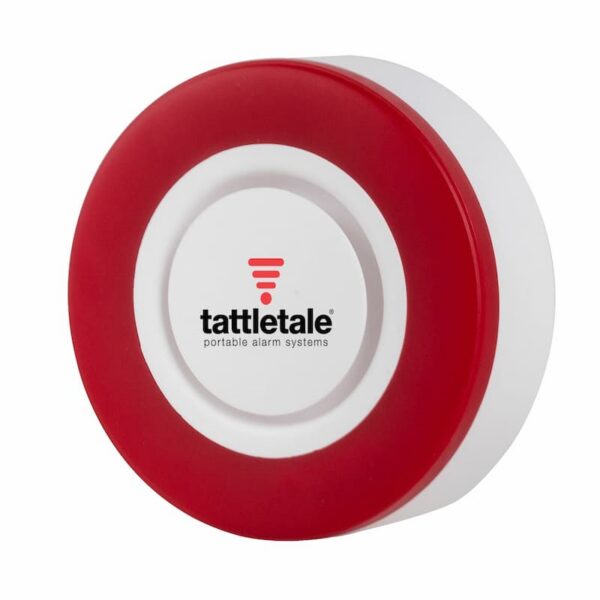
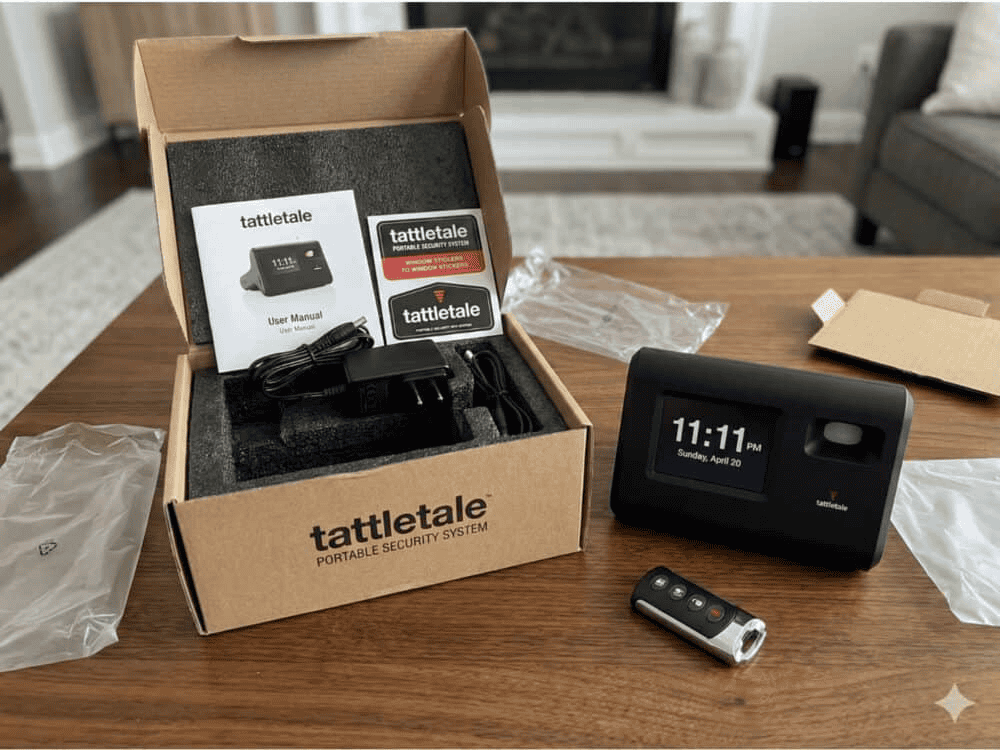
Tattletale’s portable alarm systems are built on this principle.
Every tattletale unit is sealed and tamper-proof.
There are no wires to cut.
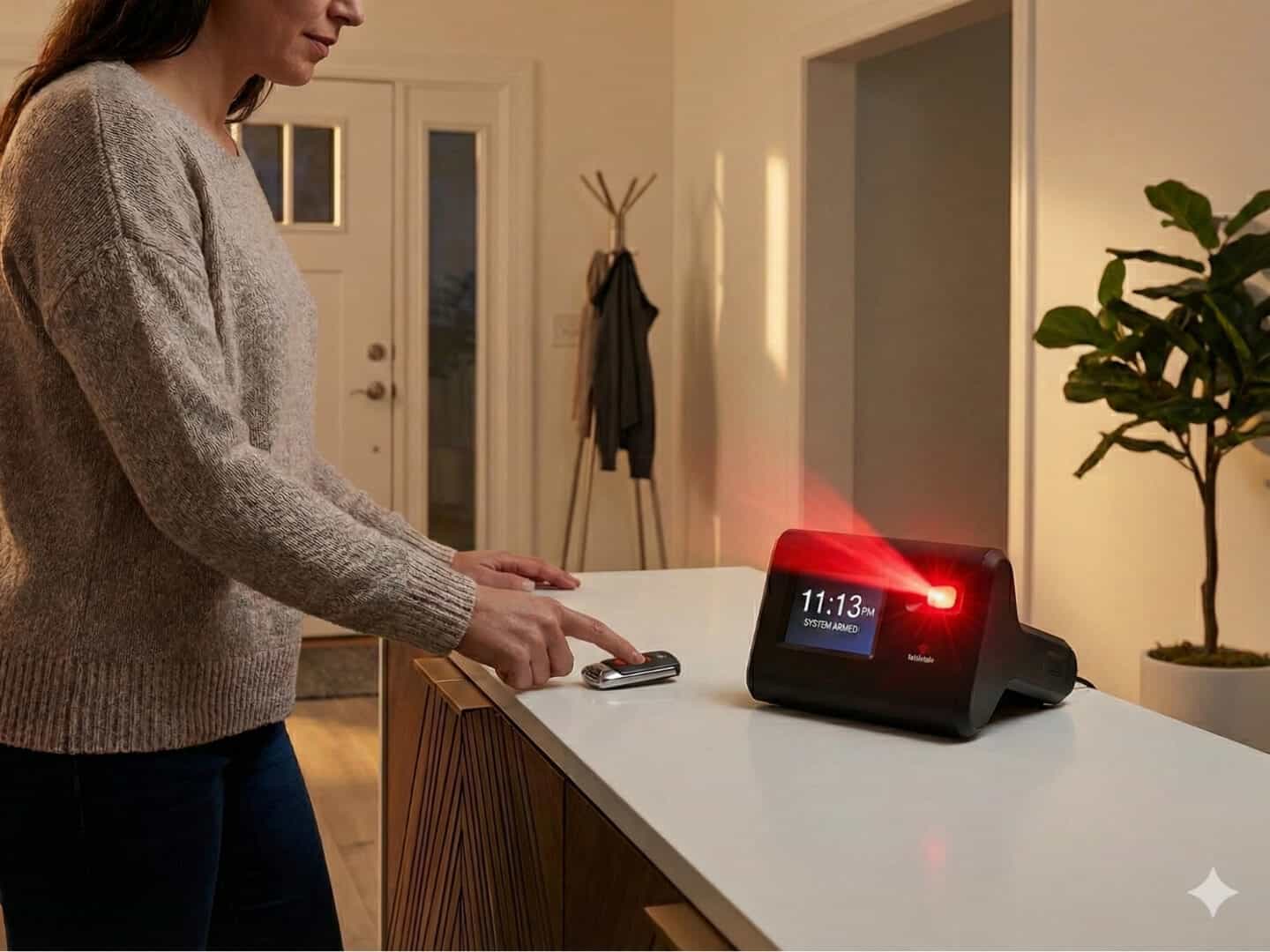
Patented Rattlesnake technology means the system sends an instant alarm signal whenever the unit is picked up or disturbed while armed.
The fastest cellular alarm signal, powered by Verizon, transmits before a break-in can progress.
And the base unit sends text alerts to your phone with no paid subscription required. You get notified the moment something happens. That’s included.
What About Monitoring? The On-Demand Model vs. Traditional Contracts
Traditional home security monitoring comes with long-term contracts.
ADT, Vivint, and similar providers often require multi-year agreements at $30 to $60 per month, depending on the package. Early termination fees apply.
The tattletale HOME operates differently.
There are no long-term contracts. Monitoring is month-to-month, and you choose the level you need:
| Monitoring Level | What You Get | Monthly Cost |
| Self-monitor (included) | The unit and sensors work as a local alarm. When triggered, the system sounds an audible siren on site. There are no text alerts, no email notifications, and no app or dashboard access at this level. You would only know the alarm has been triggered if you were physically present to hear it. | $0 (included with the system) |
| Text and email notification plan | Text and email alerts sent the moment the alarm trips. | $20.95/month |
| On Demand Monitoring | Get notified when your alarm is triggered and choose to dispatch police or fire yourself. $8 per dispatch, up to 3 per month. After 3 dispatches, all additional dispatches are free. Maximum monthly cost caps at $33.95. | $9.95/month + $8 per dispatch |
| Full central station monitoring | 24/7 professional monitoring with police, fire, and EMS dispatch. Contacts your emergency list and sends text alerts in 0.3 seconds. | $33.95/month |
No contract.
Cancel anytime.
No equipment lease.
You own the system outright.
Compare that to a Ring Protect Pro plan at $19.99 per month (which requires Ring Alarm hardware on top of camera costs), or Arlo’s Professional Monitoring at $24.99 per month. Both require you to maintain the subscription to receive the protection features you likely assumed were built in.
The Self-Monitoring Problem: What Happens at 2AM?
A growing number of homeowners say they “self-monitor.”
They get motion alerts on their phone. They check the live feed when a notification comes in. They feel in control.
During waking hours, this works. You see the alert, you check the feed, you respond.
But self-monitoring has a gap that no one likes to talk about.
It’s called sleep.
According to FBI data, while the majority of burglaries happen during the day when homes are empty, approximately 28% of residential burglaries happen at night.
And 27.6% of all burglaries happen while someone is home. Many of those are between midnight and 6am, when the homeowner is asleep with their phone on silent, charging in another room, or simply not in a position to respond to a push notification.
Self-monitoring also assumes you have signal and you have battery.
You’re not in a movie, on a plane, in a meeting, or in the shower. It assumes your phone is in your hand and your eyes are on the screen at the exact moment something goes wrong.
That is a lot of assumptions for a system designed to protect your family.
Professional monitoring exists because it removes the human variable.
A monitoring center doesn’t sleep. It doesn’t silence notifications. It responds in seconds, around the clock.
And with cellular-based systems, that response doesn’t depend on your WiFi staying online.
Frequently Asked Questions
Can a Ring doorbell camera be disabled?
Yes. Ring doorbells are mounted with screws and a faceplate. They can be physically removed in seconds. If the camera is WiFi-dependent and the home network goes down, it also stops functioning. Without an active Ring Protect subscription, the camera does not store video recordings.
Do home security cameras work without WiFi?
Most consumer cameras (Ring, Nest, Arlo, Blink, Wyze) require WiFi to function. Without an internet connection, they cannot send alerts, stream live video, or upload recordings to the cloud. Cellular-based alarm systems communicate over mobile networks and do not depend on WiFi.
What happens to my security camera if I cancel the subscription?
Without a subscription, most cameras revert to basic live viewing only. You lose cloud video storage, AI-powered detection, video history, and in most cases, emergency response features. The camera still shows a live feed, but it does not record or store footage.
What is a cellular home security system?
A cellular home security system uses mobile network infrastructure (like Verizon) to communicate alarm signals, rather than relying on WiFi or a landline. This makes it resistant to internet outages, cut cables, and WiFi disruption. tattletale systems are fully cellular and powered by Verizon.
Is self-monitoring enough for home security?
Self-monitoring provides alerts to your phone, but it depends on you being awake, available, and near your device to respond. Approximately 28% of burglaries happen at night. Professional monitoring services respond 24/7 regardless of whether the homeowner sees the alert.
Can someone jam or disable a cellular alarm system?
Cellular alarm signals are much more difficult to disrupt than WiFi signals. Consumer-grade WiFi jammers are readily available, but jamming a cellular signal on a major carrier network is illegal, requires specialized equipment, and is far less practical for a typical break-in. Cellular systems like tattletale also send their alarm signal instantly when triggered or tampered with, before any jamming attempt could take effect.
Your Camera Might Be Watching. That Doesn’t Mean It’s Protecting.
78% of homeowners have a camera. Most assume it’s enough.
It’s not enough if the subscription lapsed. It’s not enough if the WiFi is down. It’s not enough if someone pulls it off the wall in four seconds.
Protection means the signal is already sent before anyone can stop it. It means the system runs on cellular, not WiFi. It means no subscription is required for the system to alert you. It means the unit is tamper-proof, not tamper-possible.
If your home security depends on your internet connection staying up, your phone being in your hand, and a monthly subscription staying active, you have a surveillance system. You do not have a security system.
There is a difference. And the difference is measured in seconds.